Powered by Olark
Real Estate Web Site Design - Site Map HTML::Cascading Style Sheets
HomeContactSearchSite MapMore Information
Web Content Solutions


Support Login
    
     SOLUTIONS    >Content    >Hosting   >eCommerce   >Off-Site Customer Support   >Consultation

HTML::Cascading Style Sheets

HTML:Cascading Style Sheets

In computing, Cascading Style Sheets (CSS) is a stylesheet language used to describe the presentation of a document written in a markup language. Its most common application is to style web pages written in HTML and XHTML, but the language can be applied to any kind of XML document, including SVG and XUL. The CSS specifications are maintained by the World Wide Web Consortium (W3C).

Overview

CSS is used by both the authors and readers of web pages to define colors, fonts, layout, and other aspects of document presentation. It is designed primarily to enable the separation of document structure (written in HTML or a similar markup language) from document presentation (written in CSS). This separation can improve content accessibility, provide more flexibility and control in the specification of presentational characteristics, and reduce complexity and repetition in the structural content. CSS can also allow the same markup page to be presented in different styles for different rendering methods, such as on-screen, in print, by voice (when read out by a speech-based browser or screen reader) and on braille-based, tactile devices. Similarly, identical HTML or XML markup can be displayed in different 'brands', liveries or colour schemes on different but related web sites referencing different CSS.

Elements are styled through selectors. Here are some examples:

All elements

that is, using the * selector

By element name

e.g. for all 'p' or 'h2' elements

Descendants

e.g. for 'a' elements that are descendants of 'li' elements (e.g links inside lists) the selector is "li a"

class or id attributes

e.g. .class and/or #id for elements with class="class" or id="id"

Adjacent elements

e.g. for all 'p' elements preceded by 'h2' elements, the selector would be "h2 + p"

Direct child element

e.g. for all 'span' elements inside 'p', but no 'span' elements deeper within the hierarchy, the selector would be "p > span"

By attribute

e.g. for all the selector would be 'input[type="text"]'

In addition to these, a set of pseudo-classes can be used to define further behavior. Probably the best-known of these is :hover, which applies a style only when the user 'points to' the visible element, usually by holding the mouse cursor over it. It is appended to a selector as in a:hover or #elementid:hover. Other pseudo-classes and pseudo-elements are, for example, :first-line, :visited or :before. A special pseudo-class is :lang(c), where the style would be applied on an element only if it is in language "c".

Selectors may be combined in other ways too, especially in CSS 2.1, to achieve greater specificity and flexibility.

CSS information can be provided by:

Author style

external, i.e. a separate CSS-file referenced from the document

embedded in the document

inline, overriding the general style just for one occasion

User style

a local CSS-file specified by the user in the browser options, to be applied on all documents; for the case that author and user style regarding a particular style item differ, the user can specify which should determine the result.

User agent style

the default style sheet applied by the user agent, e.g. the browser's default presentation of elements.

CSS specifies a cascading order that accords relative weights to rules. When rules from different origins overlap onto a given element, the one with the greatest weight is actually applied.

Advantages of using CSS include:

Presentation information for an entire website or collection of pages resides in one place, and can be updated quickly and easily—that is, if a style sheet is imported.

Different users can have different style sheets: large print and text readers for example.

The document code is reduced in size and complexity, since it does not need to contain any presentational markup.

CSS has a simple syntax, and uses a number of English keywords to specify the names of various style properties.

A style sheet consists of a list of rules. Each rule consists of a selector and a declaration block. A declaration-block consists of a list of semicolon-separated declarations in curly braces. Each declaration itself consists of a property, a colon (:) then a value.

Example:

p {

font-family: "Garamond", serif;

}

h2 {

font-size: 110%;

color: red;

background: white;

}

.note {

color: red;

background: yellow;

font-weight: bold;

}

p#paragraph1 {

margin: none;

}

a:hover {

text-decoration: none;

}

These are five rules, with selectors p, h2, .note, p#paragraph1 and a:hover

An example of a declaration is color: red, where the property color is given the value red.

In the first two rules, the HTML elements p (paragraph) and h2 (level two heading) are being assigned stylistic attributes. The paragraph element will be rendered in Garamond font or, if Garamond is unavailable, some other serif font. The level-two heading element will be rendered in red on a white background.

The third rule shown here defines a CSS 'class', which can be assigned to any document element by using the class attribute. For example:

This paragraph will be rendered in red and bold, with a yellow background.

The fourth rule will affect a p element whose id attribute is set to paragraph1: It will have no margin within its rendering 'box'.

The last rule defines the hover action for a elements. By default in most browsers, a elements are underlined. This rule will remove the underline when the user "hovers" the mouse cursor over these elements, without clicking.

A CSS stylesheet can contain comments; the format is

/* comment */

Finally, to use a CSS stylesheet, save the code in a file like example.css and then either link to it or import it from HTML or XHTML web pages using one of the two following formats:

Note that the ' />' construct in the first example only applies in XHTML; in HTML, just close an empty element such as this with '>'.

To apply a CSS stylesheet to an XML document, add the following processing instruction, as per the XML example below:

..

HTML::Cascading Style Sheets Related Sites

[READ MORE : HTML::Cascading Style Sheets]

Real Estate Web Design Real Estate Web Design

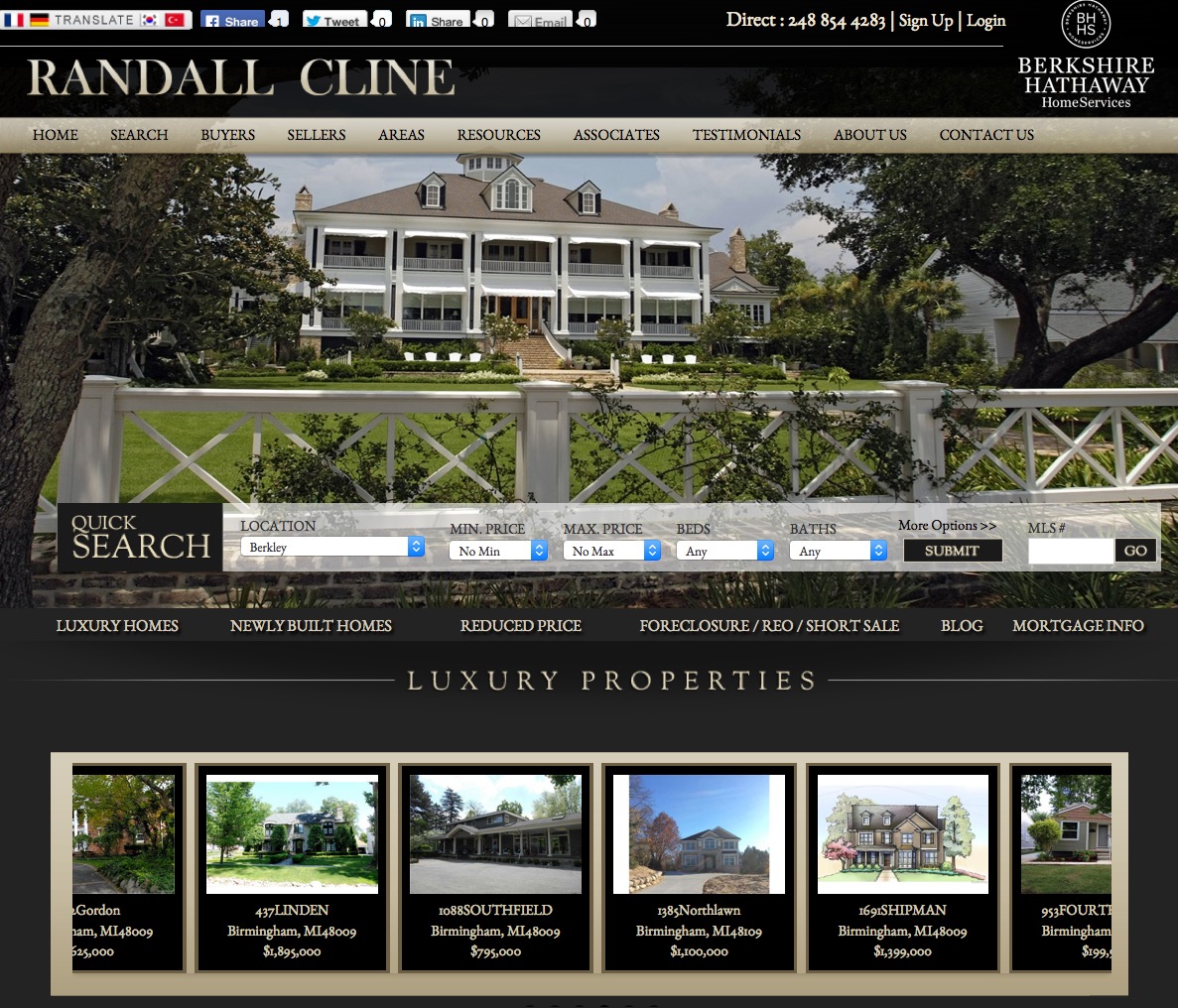
Real Estate Web Site Design is a great place to start for Real Estate Web Design Real Estate Web Site Design is what Web Content Solutions specializes in.
If you are looking for Real Estate Web Design Real Estate, you've come to the right place.
Our Real Estate Web Design Real Estate web site design specializes in Real Estate Web Design real estate web design.
Thank you for taking the time to visit my Real Estate Web Design Real Estate web site.
Feel free to use my Real Estate Web Design real estate home search. Search Real Estate Web Design Real Estate Now!