The Extensible HyperText Markup Language, or XHTML, is a markup language that has the same expressive possibilities as HTML, but a stricter syntax. Whereas HTML is an application of SGML, a very flexible markup language, XHTML is an application of XML, a more restrictive subset of SGML. Because they need to be well-formed (syntactically correct), XHTML documents allow for automated processing to be performed using a standard XML library — unlike HTML, which requires a relatively complex, lenient, and generally custom parser (though an SGML parser library could possibly be used). XHTML can be thought of as the intersection of HTML and XML in many respects, since it is a reformulation of HTML in XML. XHTML 1.0 became a World Wide Web Consortium (W3C) Recommendation on January 26, 2000.
Overview
The need for a more strict version of HTML was felt primarily because World Wide Web content now needs to be delivered to many devices (like mobile devices) apart from traditional computers, where extra resources cannot be devoted to support the additional complexity of HTML syntax.
Most of the recent versions of popular web browsers render XHTML properly, but many older browsers can only render XHTML as HTML. Similarly, almost all web browsers that are compatible with XHTML also render HTML properly. Some argue this compatibility is slowing the switch from HTML to XHTML. During October 2005 approximately 10% of web surfers were using browsers capable of rendering XHTML properly. [1] True to form, Microsoft's MSIE is incompatible with modern standards, despite Microsoft's full membership in the W3C. Therefore, most web content authors are forced to choose between writing valid, standards-compliant documents and providing content that renders properly on the browsers of most human visitors.
An especially useful feature of XHTML is that elements from different XML namespaces (such as MathML and Scalable Vector Graphics) can be incorporated within it. However, this feature is only available when serving XHTML as actual XML with the application/xhtml+xml MIME-type.
The changes from HTML to first-generation XHTML (i.e. XHTML 1.x) are minor, and are mainly to achieve conformance with XML. The most important change is the requirement that the document must be well formed and that all elements must be explicitly closed as required in XML. Since XML's tags are case-sensitive, the XHTML standard has defined all tag names to be lowercase. This is in direct contrast to established traditions which began around the time of HTML 2.0, when most people preferred uppercase tags, generally to show the contrast between mark-up and context easier to the human editor. In XHTML, all attribute values must be enclosed by quotes (either 'single' or "double" quotes may be used). In contrast, this was optional in SGML, and hence in HTML, where quotes may be omitted in some circumstances. All elements must also be explicitly closed, including empty elements such as img and br. This can be done by adding a closing slash to the start tag: and . Attribute minimization (e.g.,
Information Request
I would like to see a real site (and pricing) as well as information on availability for my area for lead generation.
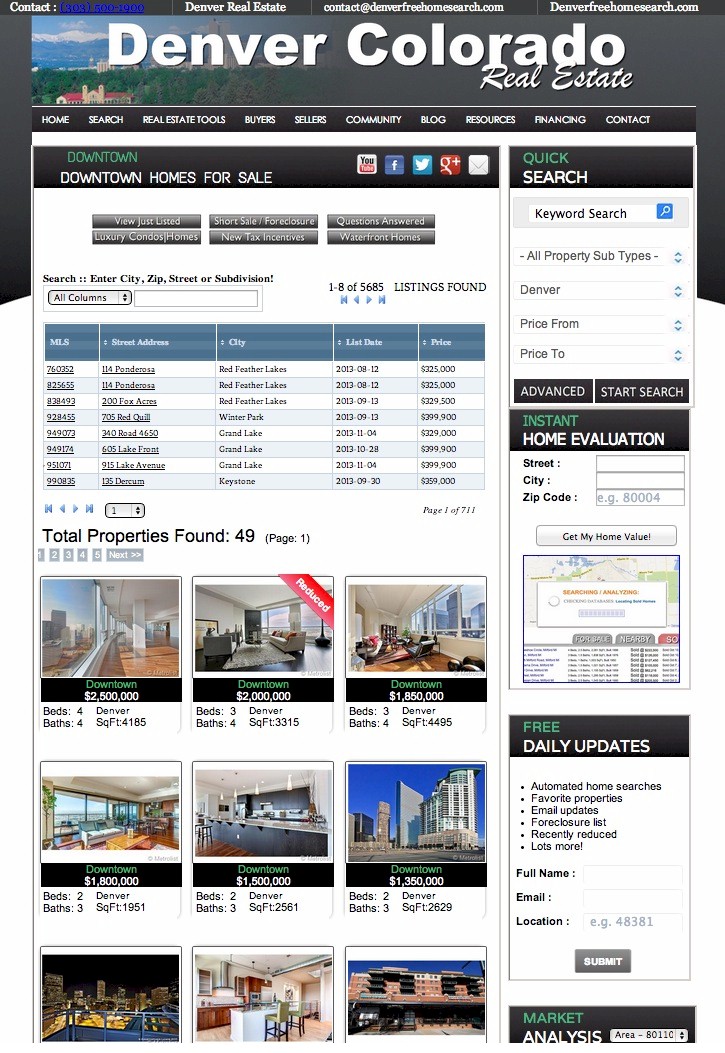
First: We create an incredible website, breaking out up to 700 communities/suburbs/subdivisions, each with its own page!
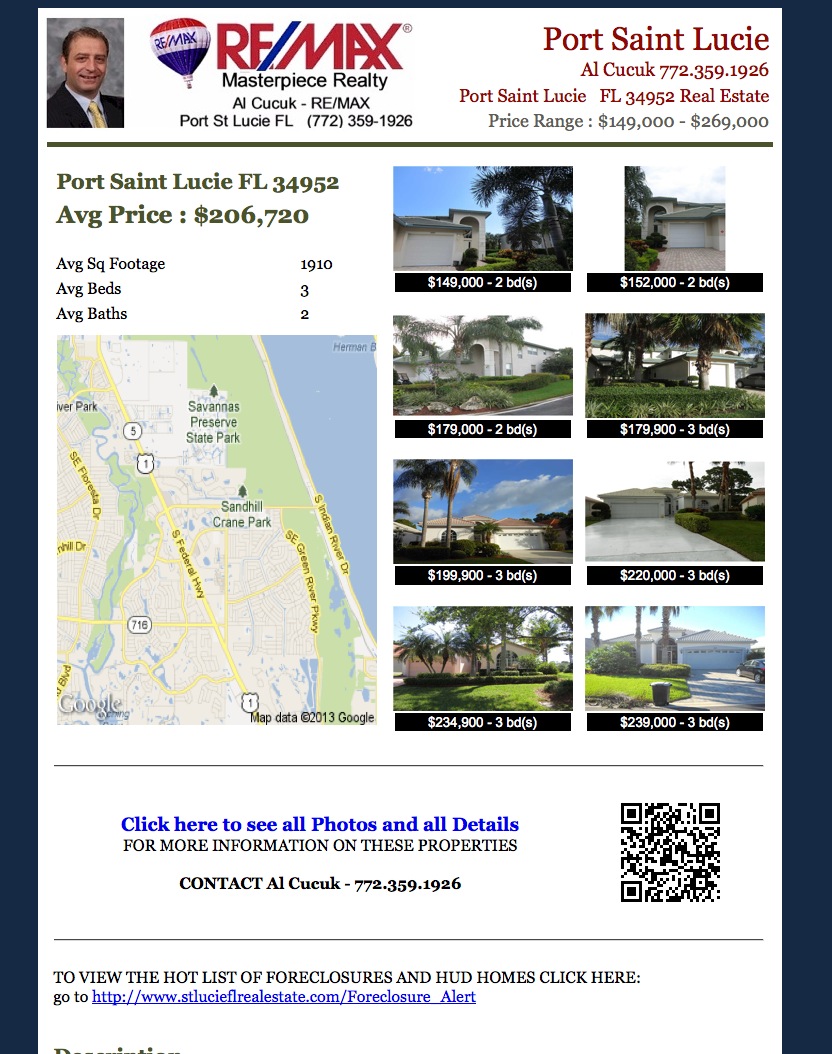
Second: We offer TWO options for our clients. One allows you to simply post (or have us do this for you) to Craigslist a high impact flyer generated by any search on your site! What this means is that you can create searches in various popular areas, at price ranges you know are popular. We even allow you to create flyers based on FORECLOSURES / HUD / SHORT SALES etc!
This allows you to generate leads by your own SWEAT EQUITY! You aren't tied to a large monthly bill to generate leads! We're the only company on the internet that offers this!
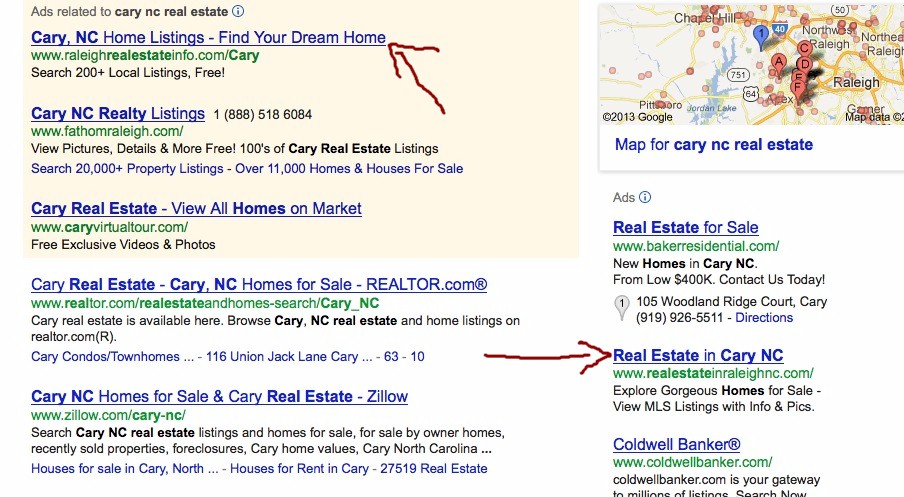
Optionally: Adwords - We CREATE for you up to 1200 ADS (Each with over 40 keyword phrases) for up to 400 communities/neighborhoods/subdivisions Each with its own landing page! No more wasting money on clicks that go to a generic page that isn't really what the client wants! We drive the client to the page they were looking for so you generate a lead for about every 7-9 clicks! (on average)
Third: We drive incoming traffic (potential clients) to a high impact (lead generating page) with lots of useful information and methods to capture leads Like View Just Listed, View Foreclosures, Answer a Question, Recently Reduced, Hot List and More!
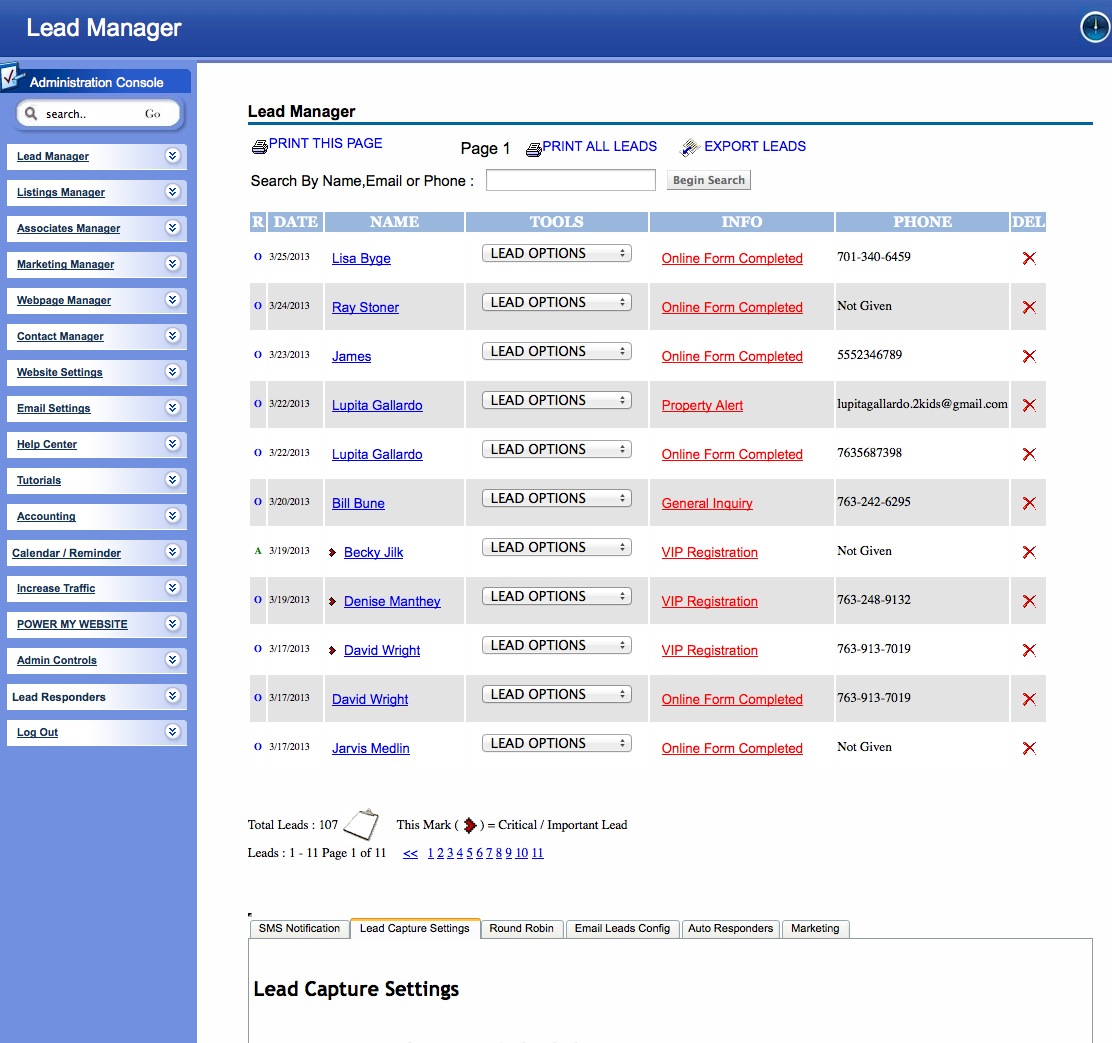
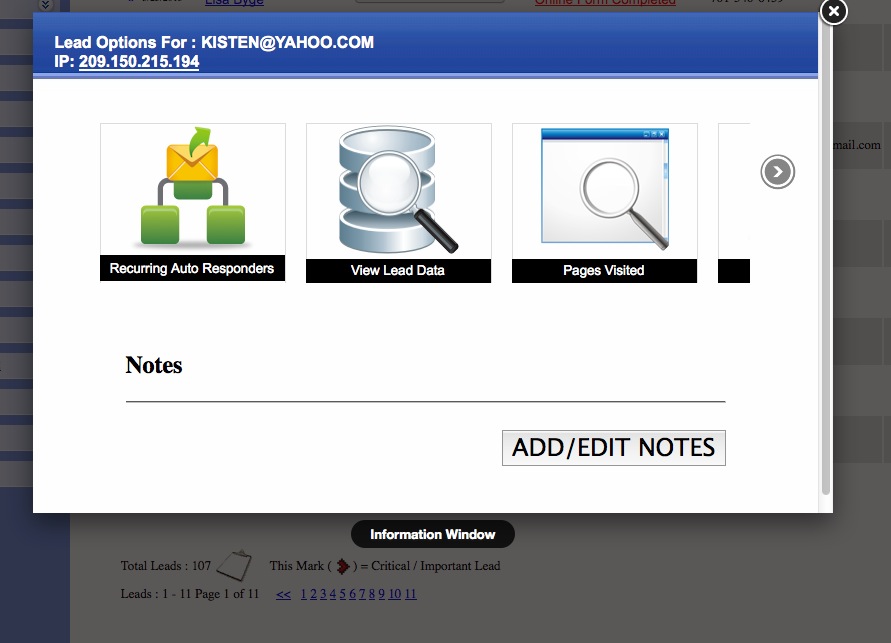
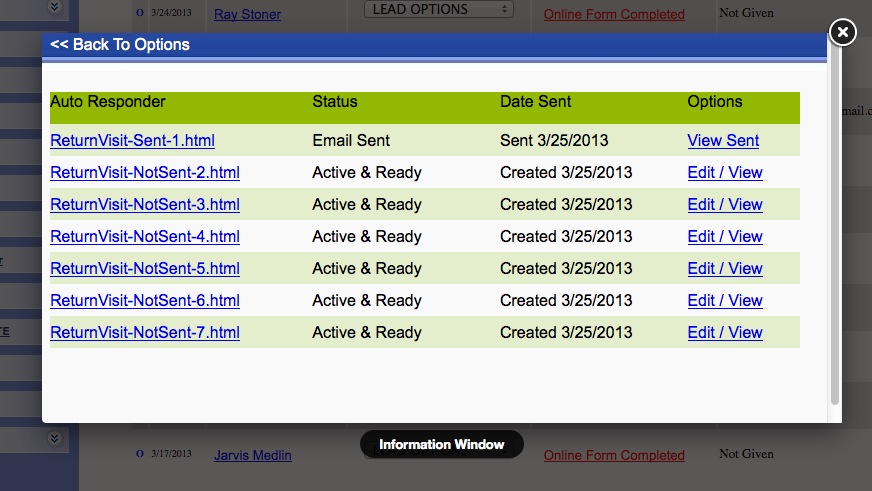
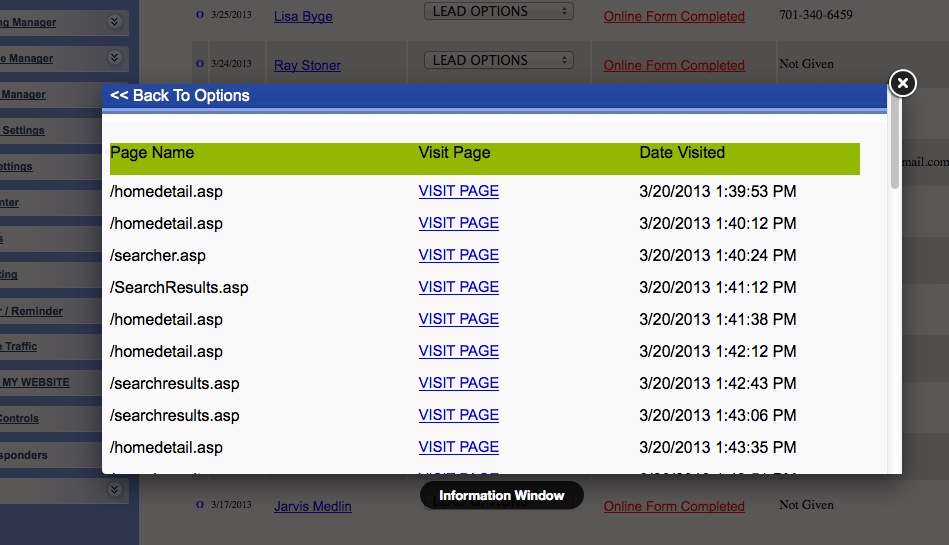
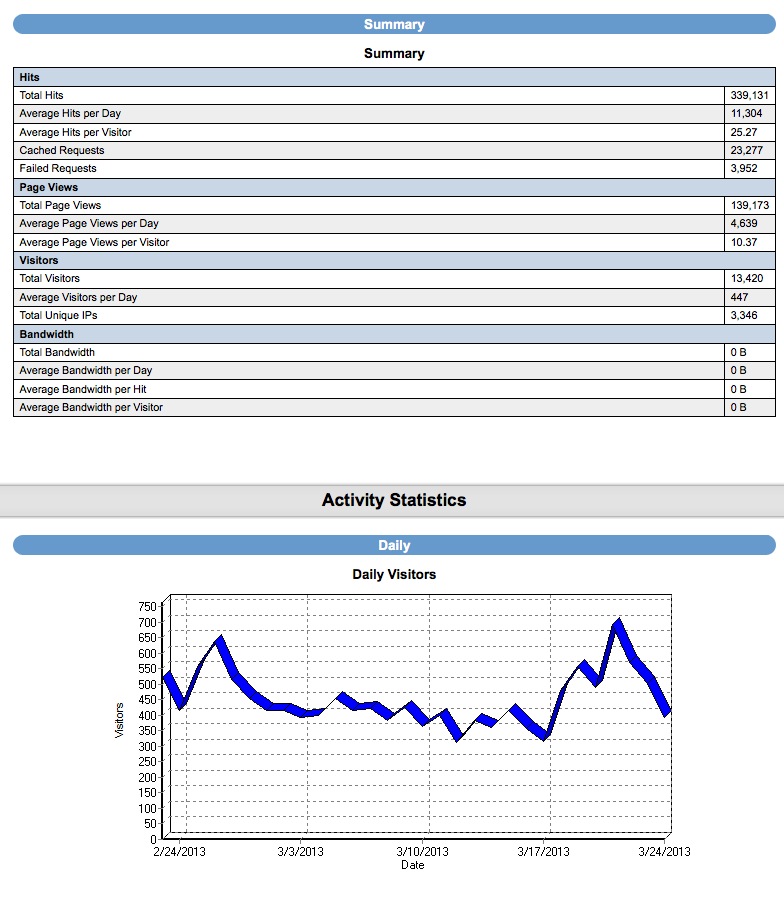
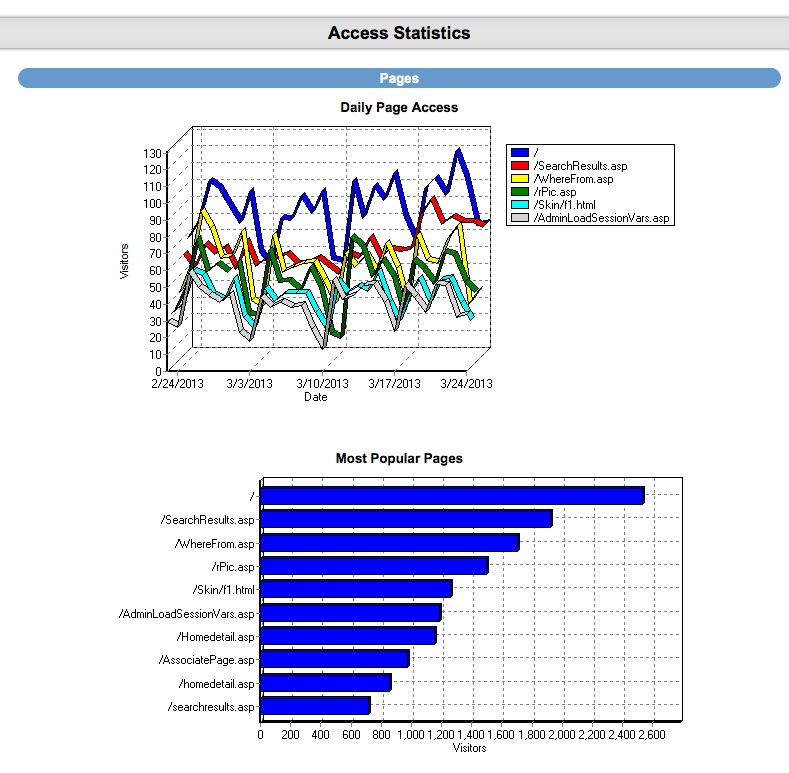
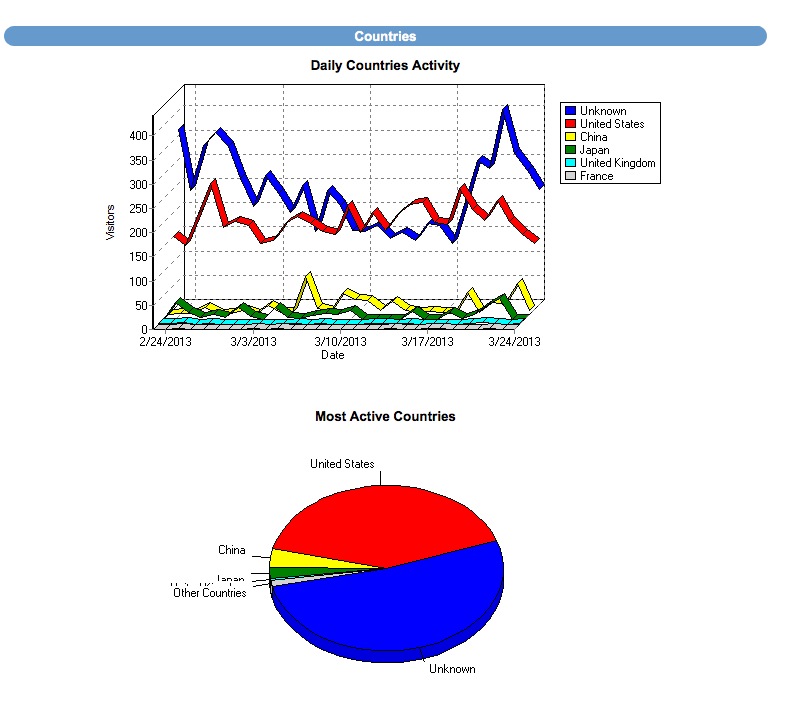
Finally: Once your generating leads (Day 1 if you're posting to craigslist!) You'll have a robust back end CRM system that will allow you to effectively manage your leads. Each time the visitor returns, they'll get an email thanking them for their return visit with different content written for each visit. You'll be able to see each page they visited and how long they stayed on each page. Advanced traffic analysis will let you know how many daily visitors you're receiving, which search engines are driving traffic to you and what keyword phrases are being used to find our site organically!
CRM also includes: Email Drip Marketing, Client login portal with saved listings, email a friend, private communication message base and document file system. Broker round robin sysetm is also built in! There are too many features to mention!
Customer Support
Top SEO Techniques
Link Building - Quality Inbound Links
Proper Text / Keyword Density (Title, Heading and Meta Tags)
REALTOR® -- A registered collective
membership mark that identifies a real estate professional who is a member of
the National Association of REALTORS® and subscribes to its strict Code of
Ethics. Realty Web Designers and Real Estate Web Site Design are not affiliated with REALTOR®, it's logos or trademarks. Thanks for your interest in real estate web design.